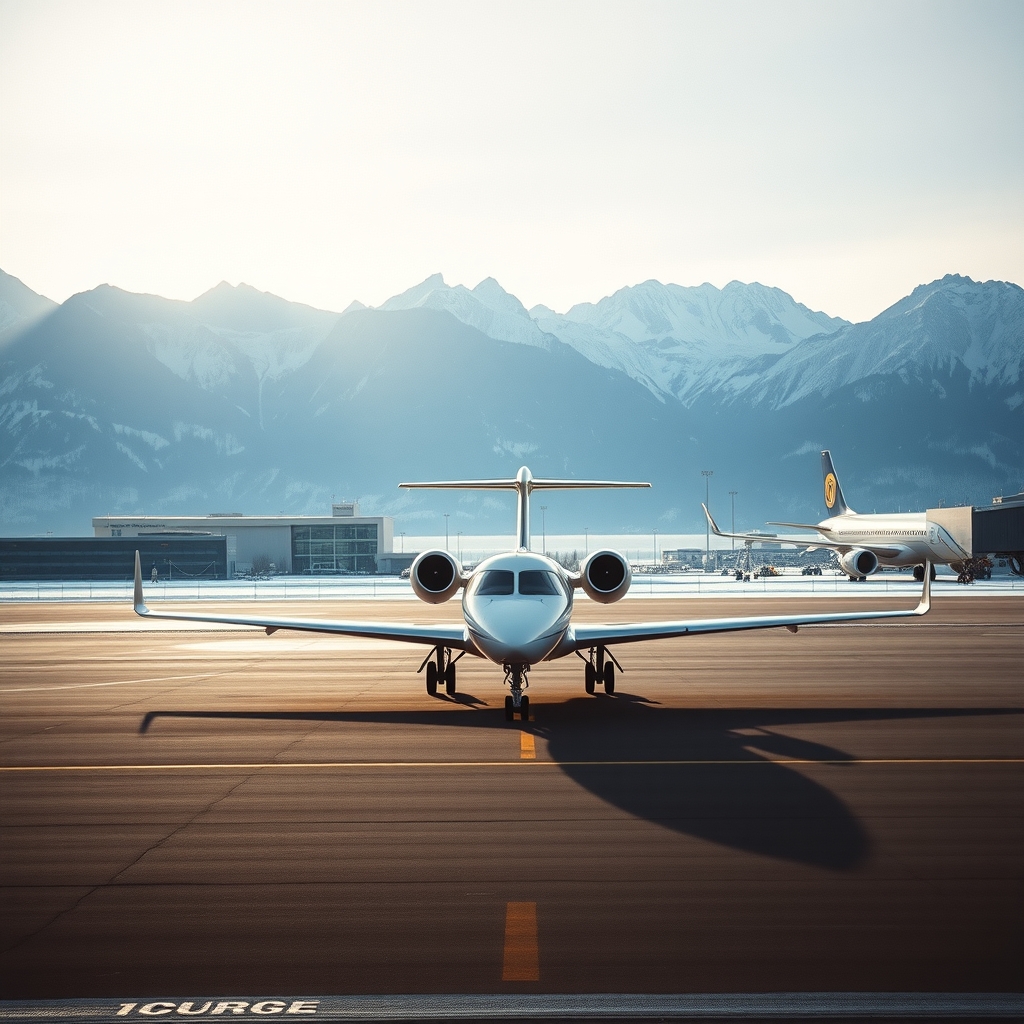
£5,858 is the lowest quoted one‑way fare for a light jet from London (Farnborough, FAB) to Geneva (GVA) today, which works out to £1,465 per passenger when four friends share the cabin. The same aircraft can carry six, dropping the per‑seat cost to £976. Those figures illustrate why the light jet dominates the Alpine corridor.
Geneva: the Alpine gateway for ski season
At 407 nautical miles, the London‑Geneva hop sits comfortably inside the range envelope of a Phenom 300, Citation XLS or Challenger 350. Block time averages 1 hour 20 minutes, leaving ample daylight for a quick transfer to Verbier, Chamonix, Courchevel or Méribel. The real bottleneck is the Saturday after the first snow – a Saturday slot that fills within days, sometimes hours, because ski clubs, schools and high‑net‑worth families all converge on the same lift queues.
Winter Saturdays are the crunch because most ski schools run full‑day programmes, and many hotels only release half‑board rooms on that day. A private jet that lands before 10 am gives passengers a full piste day without the scramble for a lift‑ticket queue. Operators therefore treat a Saturday slot as a premium product, often adding a handling surcharge at GVA that is billed separately.
£5,858: the light‑jet baseline for four travellers
Dividing the quoted light‑jet price by four yields £1,465 per seat. Compare that with a typical business‑class ticket on a major carrier, which sits around £1,200‑£1,400 for the same route, and you see a modest premium for privacy, door‑to‑door service and the ability to bring a pet in the cabin. For six passengers the per‑seat cost falls to £976, a saving of over a third per head.
Rule: book any winter Saturday before 1 March to lock the base rate; after that date operators routinely apply a 20 % uplift to compensate for the higher demand and crew‑duty extensions that push the flight into evening hours.
The counter‑intuitive part of this sector is that the light jet, despite a lower cruise speed, often beats a midsize jet on total cost per hour. The Phenom 300 burns roughly 150 kg of fuel per hour versus 200 kg for a Citation XLS, and its crew duty limit of eight hours means no extra crew changeover fees on this short hop. The slower speed is offset by a lower hourly rate, delivering the best value per nautical mile.
The trade‑off for that value is reduced baggage allowance and limited cabin space for a dog. A Phenom 300 can accommodate a small kennel in the forward luggage compartment, but larger breeds require a midsize jet. Operators will tell you whether handling at GVA will need a special pet‑carrier fee, which is billed separately from the quoted block price.
Book early: the 1 March deadline for winter Saturday slots
When you contact an operator, ask specifically about three mechanisms that can inflate the headline figure: (1) crew‑duty extensions if the flight pushes past the standard eight‑hour limit, (2) handling fees at Geneva that are added after the flight plan is filed, and (3) repositioning legs that may be required to bring the aircraft to FAB on the desired date. Each of these items appears on the live board – today there are 227 repositioning legs across 28 aircraft types – and they influence the final invoice.
- Light jet (Phenom 300): £5,858‑£8,786
- Midsize jet (Citation XLS): £8,952‑£13,428
- Heavy jet (Challenger 350): £15,288‑£24,399
Ask the operator for a firm quote that locks in the aircraft type, the exact departure window and any ancillary charges. A clear, itemised figure lets you compare the per‑seat cost against a commercial business‑class ticket and decide whether the extra convenience – a private terminal, no queues, the option to travel with a dog – justifies the premium.
In practice, the light‑jet option delivers the cheapest per‑seat price for four or six people, but it comes with tighter luggage limits and a smaller cabin for a pet. If you need extra space, a midsize jet offers a larger baggage hold and a more comfortable dog area, at a cost that rises to roughly £2,238 per seat for four travellers. Heavy jets, while luxurious, are best reserved for groups larger than six or when you require a full‑size cabin for equipment such as ski racks.
Bottom line: for a ski season launch in the Alps, the maths favours a light jet booked before 1 March for a Saturday slot. The per‑seat cost stays under £1,500, handling fees are transparent, and you avoid the alternative – a crowded commercial terminal and a delayed lift start. The decision rests on how much cabin space you need versus the price you’re prepared to pay.