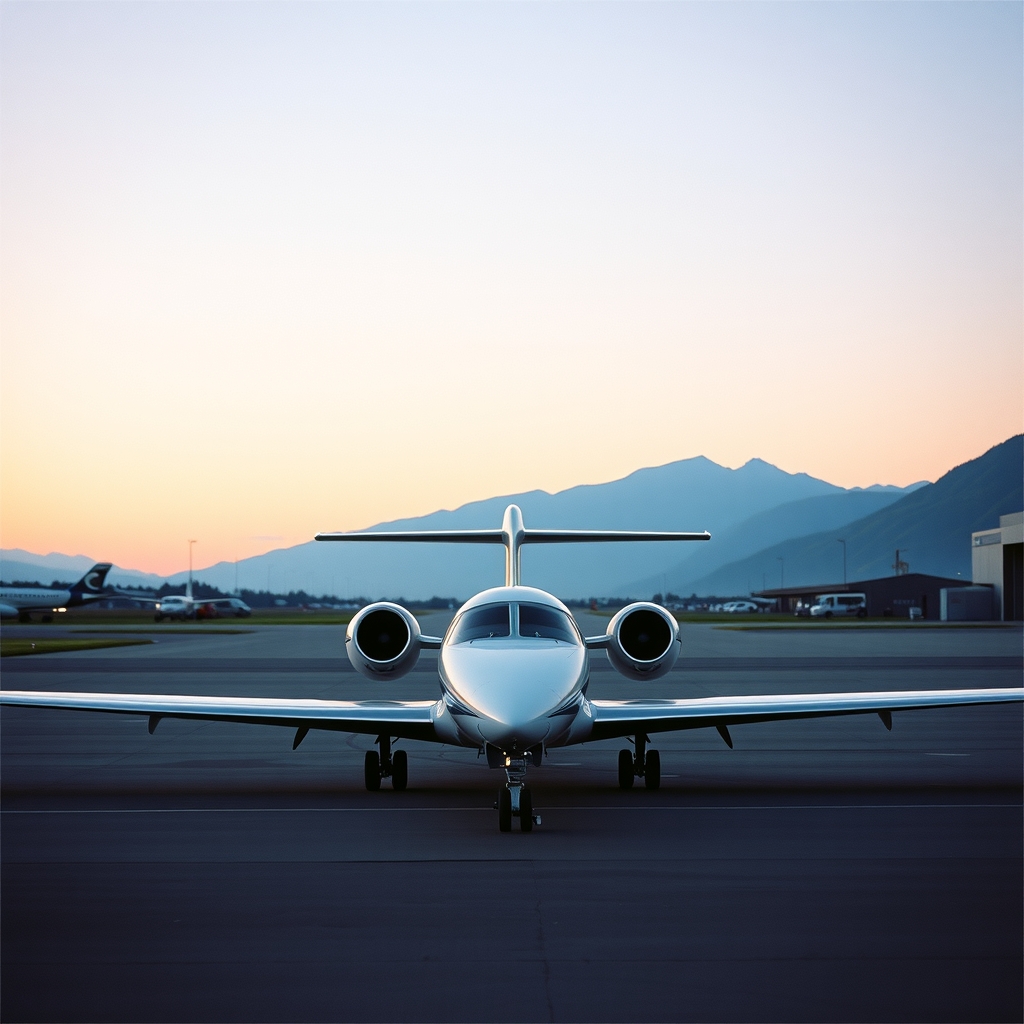
$3,497 is the lowest quoted one‑way fee for a light jet on the 124‑nm Geneva‑Zurich sector today. That figure covers the whole aircraft, crew, fuel and standard handling, but it does not include ancillary items such as night‑curfew fees or positioning legs that may appear on the final invoice.
Geneva‑Zurich deadhead charter flights: price per seat
The route between Geneva International (GVA) and Zurich International (ZRH) is a textbook short‑haul, with a great‑circle distance of 124 nautical miles and a typical block time of 40 minutes. Because the flight duration is under an hour, the hourly rate is a useful benchmark. Dividing the quoted fare by the block‑time fraction (0.667 h) yields an hourly cost of roughly $5,242 for a light jet, $8,115 for a midsize jet, and $14,108 for a heavy jet.
Per‑seat calculations expose the real economics. A light jet such as the Phenom 300 often seats six; at the low end of the range the per‑seat cost is $583 when six passengers share the aircraft, rising to $874 each if only four travellers are on board. A midsize cabin – for example a Citation XLS – typically holds eight; using the $5,412 base price the per‑seat cost drops to $677. A heavy jet like the Learjet 75, capable of ten seats, produces a per‑seat cost of $941 at the $9,408 baseline.
Compared with a business‑class ticket on a scheduled carrier, which averages about $1,100 on this corridor, the light‑jet option becomes competitive once three or more passengers split the cost. The midsize jet matches business class only when eight passengers fill the cabin, while the heavy jet remains above the scheduled fare unless the aircraft is fully occupied – a scenario rarely seen on a 124‑nm hop.
Light‑jet economics on a 124‑nm sector
Operators routinely slot the Phenom 300 or similar aircraft for this distance because the aircraft’s range comfortably exceeds the route, leaving a generous fuel reserve. The primary advantage is the low fixed‑cost base; the aircraft’s operating expense is primarily fuel burn and crew time, both of which are modest for a 40‑minute block. The downside is the limited baggage allowance and the need for a repositioning (ferry) leg if the aircraft is not already at GVA. Our live board shows 188 repositioning legs across 24 types, meaning that a light jet may arrive at GVA as a deadhead from a nearby European hub, incurring a handling charge that is billed separately and can push the final price toward the upper $5,245 limit.
Because crew duty limits are strictly enforced, a pilot may only operate a maximum of four hours before mandatory rest. On a short hop this restriction rarely forces a crew change, but if the deadhead leg arrives late in the day, a night‑curfew at Zurich can trigger a surcharge that again nudges the total upward.
When the midsize jet becomes the better choice
If a group of five to eight travellers needs extra cabin space – for larger laptops, briefcases or a small conference set‑up – the midsize category starts to win. The Citation XLS offers a wider cabin and a higher maximum take‑off weight, allowing it to carry more baggage without compromising range. The price spread ($5,412‑$8,118) reflects both the aircraft’s higher fuel consumption and the additional crew hours required for pre‑flight checks on a larger airframe.
One counter‑intuitive observation: on a sector that fits a light jet perfectly, a midsize jet can sometimes be cheaper per passenger when the group exceeds four. The arithmetic is simple – split $5,412 by six passengers and the result is $902 each, still above the light‑jet $583 figure, but when eight passengers share the midsize, the cost falls to $677, a level that rivals a light jet with only four occupants. The trade‑off is the higher fixed cost and a potential positioning leg: midsize jets are less likely to be positioned deadhead on short routes, so an operator may need to ferry the aircraft from a distant base, inflating the total.
Heavy‑jet cost ceiling and when to consider it
Heavy jets such as the Learjet 75 command the $9,408‑$14,607 range for the same hop. Their primary selling point is prestige and the ability to accommodate executive‑level meetings in flight. The cabin volume and stand‑up height are unmatched on a 124‑nm leg, and the aircraft can carry a full‑size briefcase for each passenger.
The price spike is not merely a function of fuel burn; heavy jets incur higher landing fees, more complex handling, and stricter crew duty regulations that often require a second pilot even for a 40‑minute flight. Night‑curfew penalties are also more pronounced because heavy jets are often assigned to premium slots that clash with local restrictions. As a result, the per‑seat cost – $941 at the low end – only makes sense for groups of ten or for clients who value the cabin environment above raw cost.
Rule of thumb: passenger count vs. per‑seat cost
If you have four or fewer travellers, a light jet is the cheapest per‑seat option. If the party grows to five‑eight passengers, compare the light‑jet price split against the midsize‑jet split; the midsize becomes cheaper per seat once eight seats are filled. For nine‑plus travellers, only a heavy jet can accommodate the group without sacrificing comfort, but the per‑seat cost will remain above the business‑class fare unless the aircraft is full.
Applying the rule saves time: count the heads, select the class that yields the lowest per‑seat figure, then verify whether a repositioning leg or night‑curfew surcharge will apply. The live board’s 188 deadhead legs illustrate that repositioning is a common hidden cost; a quick check with the operator about the aircraft’s current location can avoid an unexpected handling charge.
Key cost drivers for deadhead charter flights
- Crew duty limits that may force a second crew member on larger aircraft
- Handling fees at GVA and ZRH that are billed separately from the quoted fare
- Night‑curfew restrictions that trigger surcharge penalties
- Ferry‑leg positioning when the aircraft is not already at the departure airport
- Airport congestion that can delay block time and increase fuel burn
Understanding these variables turns a quoted figure into a predictable expense. The Geneva‑Zurich corridor offers an ideal case study: short distance, high frequency, and a clear hierarchy of aircraft classes. By dissecting the numbers, passengers can decide whether a light jet’s $583 per seat for six occupants, a midsize’s $677 for eight, or a heavy jet’s $941 for ten best matches their budget and comfort requirements.